10BASE-T1S 与传统以太网:一场布线革命
在工业 4.0 与智能制造的浪潮中,“数据直达边缘(To the Edge)”已成为不可逆转的趋势。然而,长期以来,工业现场的末端感知与控制网络一直受困于两大“泥潭”:一边是网络层次复杂、线缆繁琐且成本高昂的传统以太网;另一边则是协议老旧、带宽瓶颈严重、安全裸奔的 RS-485 总线。
IEEE 802.3cg 标准定义的 10BASE-T1S(单对线以太网物理层标准),正在以一种全新的物理层与总线拓扑架构,掀起一场工业现场连接的布线革命。
1. 传统以太网在工业边缘的“致命硬伤”
传统的工业以太网(如 PROFINET、EtherCAT、Modbus TCP)在骨干网层面表现优异,但当它们试图下沉到产线的最末端(如温湿度传感器、阀门、小微执行器)时,就会暴露出极高昂的物理成本与布线复杂性:
- 交换机泛滥:传统以太网采用星型拓扑。如果产线沿线有 8 个传感器,你就必须在中间放置一台 8 口工业以太网交换机,并从交换机引出 8 根网线分别接到每个传感器。这种架构让交换机成了现场的耗能、故障点与成本大户。
- 线缆笨重繁杂:标准 RJ45 网线(4 对 8 芯双绞线)直径粗、弯曲半径大,在狭窄的设备内部或拖链中极难布置。
- 接口体积过大:RJ45 接口和磁性变压器的体积,直接锁死了传感器等微型端点设备的极限微型化设计。
2. 10BASE-T1S:单对线多点总线的降维打击
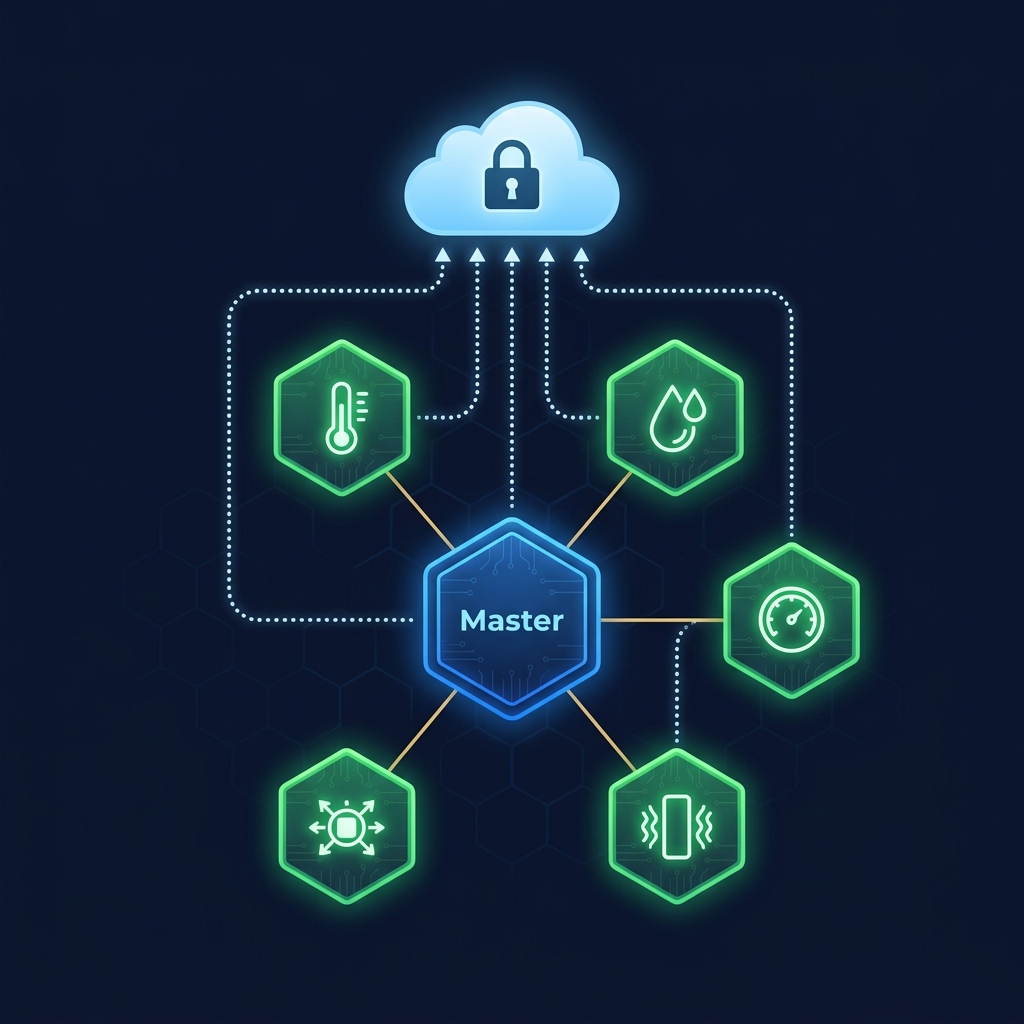
10BASE-T1S 正是为了解决以太网的“最后一公里”痛点而诞生的。它具有以下三个核心物理特性:
2.1 菊花链多点拓扑 (Multidrop)
与传统以太网必须使用交换机的星型连接不同,10BASE-T1S 支持像 RS-485 那样的多点总线型拓扑 (Multidrop)。这意味着,你可以将一根单对双绞线沿产线拉出,通过“插针”或直接剥线压接的方式,将多达 8 个节点并联到这一根总线上。
无需任何交换机,消灭点对点繁琐接线。
2.2 PLCA 物理层冲突规避机制 (时分仲裁)
在共享总线上,如果多个节点同时发送数据,就会产生碰撞 (Collision)。传统的 CSMA/CD 冲突检测会导致带宽暴跌且时序极不确定。
10BASE-T1S 引入了创新的 PLCA (Physical Layer Collision Avoidance) 机制。PLCA 在物理层通过时分复用(TDMA)的思想,为总线上的每个节点分配一个极其短暂的专属发送槽(Transmit Opportunity)。
* 零碰撞:节点只在自己的发送槽内发送数据,物理层绝对不会发生碰撞。
* 微秒级确定性延迟:即使 8 个节点全部全载发包,系统总线延迟也严格受控在微秒级,为具身智能与大模型感知提供了高质量的时序确定性。
💡 PLCA 仲裁小百科
PLCA 通过主节点(Node 0)周期性发送的 BEACON 信号进行时钟同步。每个从节点依次轮询发包,若某个节点没有数据要发,则瞬间跳过,将带宽无缝让渡给下一个节点,从而保证了高达 10 Mbps 带宽的极致利用率。
2.3 物理介质与 PoDL 供电极度精简
10BASE-T1S 仅需要一根单对无屏蔽双绞线 (SPE)。同时,结合 PoDL (Power over Data Line) 技术,可以直接在一根双绞线里同时传输 10 Mbps 数据与 DC 电力。现场传感器不再需要单独布设电源线,接线工作量直接削减 50%。
3. 对比传统 RS-485:速度与安全的双重代差
有些工程师会问:既然都是单对线总线拓扑,为什么不用 RS-485 (Modbus RTU)?
答案是:10BASE-T1S 与 RS-485 存在本质的代差:
| 维度 |
RS-485 (传统总线) |
10BASE-T1S (单对线以太网) |
| 物理带宽 |
典型值 9.6 - 115.2 kbps |
10 Mbps (提升近 100 倍) |
| 网络层级 |
串行总线,需要网关翻译为 TCP/IP |
原生以太网,每个节点都有独立 IP |
| 安全机制 |
物理明文传输,无加密可能 |
原生支持 TLS 1.2 / TLS 1.3 加密 |
| 仲裁冲突 |
主从问答式,从节点无法主动告警 |
PLCA 轮询,从节点毫秒级主动上报异常 |
当边缘感知端点引入大模型和高速控制算法时,RS-485 那几十 kbps 的带宽和简陋的主从机制,根本无法承载复杂的传感器物模型数据流。而 10BASE-T1S 原生提供的 IP 通道,让每一个边缘端点都成为了互联网上的“一等公民”,能够直接安全连接云平台。
4. 结语
10BASE-T1S 物理层标准的落地,并不是对以太网的简单延伸,而是对末端工控连接的彻底重构。它用一根线缆、多点总线、零交换机的架构,既保留了以太网原生 IP、高速、TLS 安全的现代文明,又继承了 RS-485 拓扑简单、线缆廉价的物理优势。
KeeTion 公司打造的 OpenT1S 模组正是基于这一颠覆性标准而生。我们相信,一根双绞线,终将串联起整个具身智能与工业 AI 的物理感知神经网络。
10BASE-T1S vs Traditional Ethernet: A Wiring Revolution
In the wave of Industry 4.0 and Smart Manufacturing, bringing "Data to the Edge" has become an irreversible trend. However, for a long time, the end-point sensing and control networks on the factory floor have been trapped in two major bottlenecks: on one side, traditional Ethernet with complex network hierarchies, tedious wiring, and high hardware costs; on the other side, the ancient RS-485 bus with severe bandwidth bottlenecks and non-existent security.
10BASE-T1S (Single Pair Ethernet physical layer standard), defined by the IEEE 802.3cg standard, is unleashing a wiring revolution in industrial physical connectivity with a brand-new physical layer and bus topology.
1. Critical Weaknesses of Traditional Ethernet at the Industrial Edge
While traditional Industrial Ethernet (such as PROFINET, EtherCAT, Modbus TCP) performs excellently in backbone networks, it reveals extremely high physical costs and wiring complexity when descending to the extreme edge of the production line (such as temperature/humidity sensors, valves, micro-actuators):
- Switch Proliferation: Traditional Ethernet adopts a star topology. If you have 8 sensors along a conveyor belt, you must place an 8-port industrial Ethernet switch in the middle and run 8 separate cable runs from the switch to each sensor. This architecture makes switches a major source of power consumption, point of failure, and cost.
- Bulky Cabling: Standard RJ45 network cables (4-pair, 8-core twisted pairs) have thick diameters and large bending radii, making them extremely difficult to route inside tight enclosures or drag chains.
- Overlarge Interfaces: The physical dimensions of RJ45 connectors and magnetic transformers directly prevent extreme miniaturization designs for sensors and other micro-endpoints.
2. 10BASE-T1S: A Multidrop Paradigm Shift
10BASE-T1S was born precisely to solve the "last mile" pain points of Ethernet. It features three core physical properties:
2.1 Daisy-Chain Multidrop Topology
Unlike traditional Ethernet, which requires point-to-point connections through switches, 10BASE-T1S supports a multidrop bus topology similar to RS-485. This means you can run a single twisted pair along the production line and connect up to 8 nodes in parallel on this single bus.
No switches required, eliminating cluttered point-to-point runs.
2.2 PLCA (Physical Layer Collision Avoidance)
On a shared bus, collisions occur if multiple nodes transmit simultaneously. Traditional CSMA/CD collision detection causes bandwidth to plunge and leads to highly non-deterministic timing.
10BASE-T1S introduces the innovative PLCA mechanism. PLCA works at the physical layer, using a time-division multiplexing (TDMA) philosophy to assign a brief, exclusive transmit opportunity (TO) to each node on the bus.
* Zero Collisions: Nodes only transmit during their assigned opportunities, completely avoiding physical layer collisions.
* Microsecond-Level Deterministic Latency: Even under full load across all 8 nodes, the bus latency is strictly bounded within microseconds, providing high-quality deterministic timing for embodied AI and large model perception.
💡 PLCA Arbitration Insights
PLCA syncs clocks via periodic BEACON signals sent by the Master (Node 0). Slave nodes take turns transmitting. If a node has no data to send, it immediately yields its slot, letting the next node transmit, ensuring maximum utilization of the 10 Mbps bandwidth.
2.3 Minimal Physical Medium & PoDL
10BASE-T1S requires only a single unshielded twisted pair (UTP). Combined with PoDL (Power over Data Line) technology, it carries both 10 Mbps data and DC power over the same single pair. Sensors no longer need separate power cabling, cutting installation labor by 50%.
3. Versus Traditional RS-485: A Generational Divide
Some engineers ask: since both use a single-pair bus topology, why not just use RS-485 (Modbus RTU)?
The answer is: 10BASE-T1S and RS-485 are separated by a generational divide:
| Dimension |
RS-485 (Legacy Bus) |
10BASE-T1S (Single Pair Ethernet) |
| Physical Bandwidth |
Typically 9.6 - 115.2 kbps |
10 Mbps (~100x increase) |
| Network Hierarchy |
Serial bus requiring gateways to translate |
Native Ethernet; each node has a unique IP |
| Security Mechanism |
Plaintext transmission; impossible to encrypt |
Native support for TLS 1.2 / TLS 1.3 |
| Collision Arbitration |
Master-Slave polling; Slaves cannot alert actively |
PLCA Round-Robin; Slaves report anomalies in ms |
When edge sensing endpoints incorporate large models and high-speed control loops, the kbps bandwidth and simple Master-Slave polling of RS-485 are completely inadequate. The native IP channel provided by 10BASE-T1S makes every edge node a first-class internet citizen, capable of secure, direct cloud connectivity.
4. Conclusion
The implementation of the 10BASE-T1S physical layer standard is not just a simple extension of Ethernet, but a complete reconstruction of industrial connectivity. By combining one cable, multidrop bus, and zero switches, it preserves the benefits of native IP, high speed, and TLS security while inheriting the physical simplicity and low cabling costs of RS-485.
KeeTion's OpenT1S module was built precisely for this disruptive standard. We believe that a single twisted pair will ultimately connect the physical neural network of embodied AI and industrial automation.